
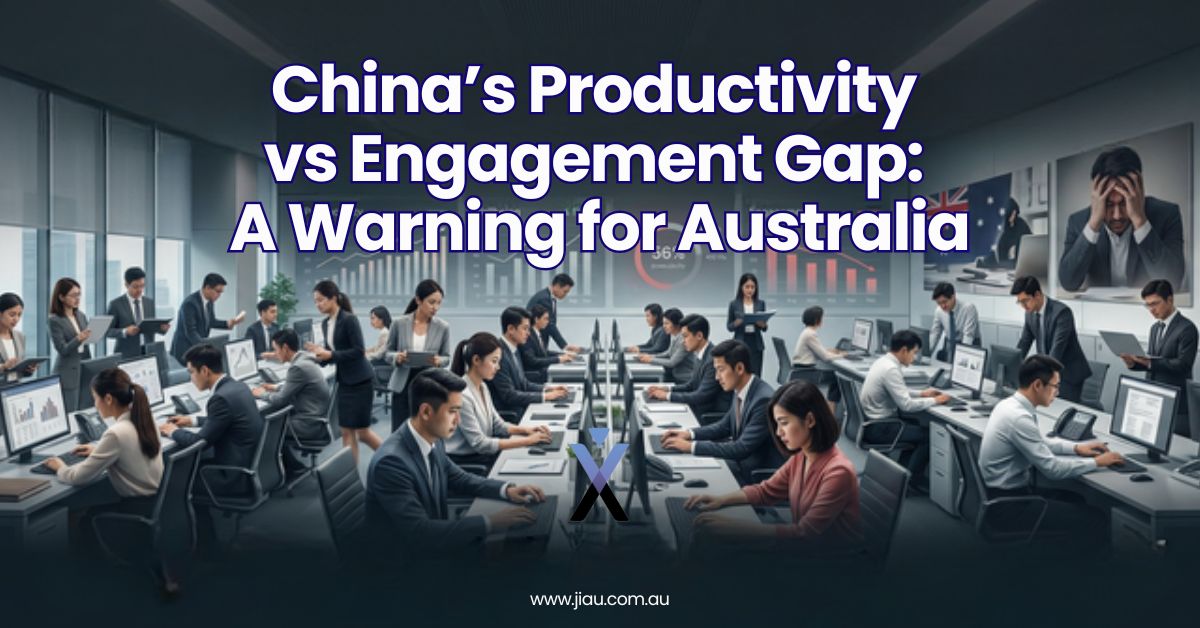
Based on Gallup’s workplace engagement reporting and APAC workforce trend analysis, China has become one of the world’s most productive economic powers.
Its workforce is recognised globally for:
- operational intensity
- execution speed
- manufacturing capability
- tactical precision
- large-scale delivery capacity
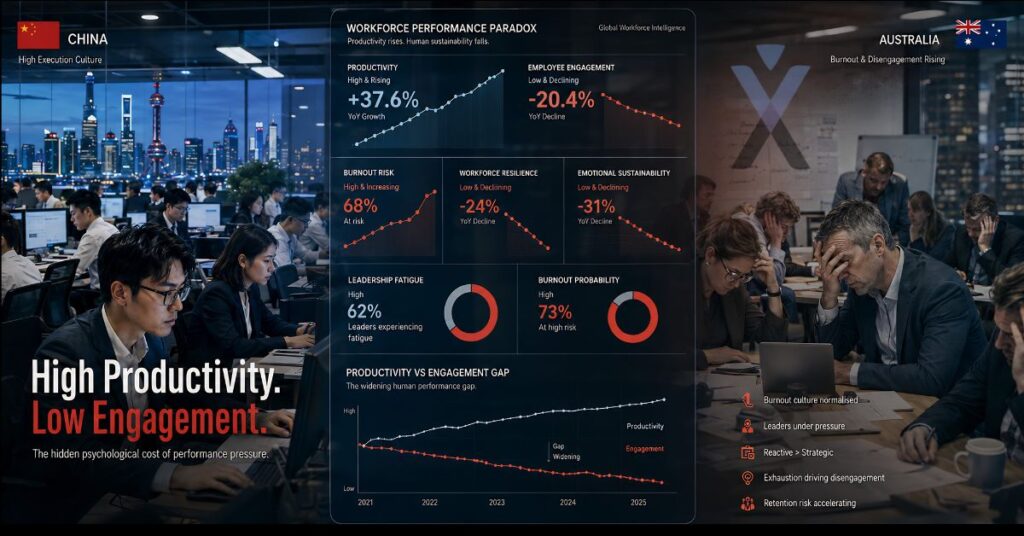
Yet despite extraordinary productivity, employee engagement across China remains among the lowest in APAC.
This creates one of the most important workforce paradoxes modern organisations must understand:
High productivity does not automatically create sustainable engagement.
Australia faces a different version of the same issue.
Australian workplaces often report higher engagement levels than China yet burnout, emotional fatigue, and active disengagement continue rising sharply.
Two different workforce models.
One common underlying problem:
Judgement misalignment under pressure.
And for Australian organisations, China’s workforce model offers an important warning about the long-term risks of performance without emotional sustainability.
Productivity Can Hide Deeper Workforce Instability
One of the greatest misconceptions in organisational performance is assuming productivity equals workforce health.
It does not.
Employees can remain highly productive while internally experiencing:
- emotional exhaustion
- low resilience
- disengagement
- psychological fatigue
- declining meaning
- pressure overload
In high-pressure environments, productivity itself can actually mask early signs of workforce deterioration.
This is especially dangerous because organisations often interpret continued output as evidence everything is functioning well.
Meanwhile:
- burnout quietly spreads
- emotional sustainability declines
- trust weakens
- resilience erodes
- judgement quality deteriorates
China’s workforce demonstrates this paradox clearly.
The Productivity-Engagement Gap Is Growing Globally
Many modern organisations are becoming increasingly operationally efficient while becoming psychologically weaker internally.
This creates workplaces where:
- output remains high
- pressure remains constant
- recovery remains low
- emotional fatigue accumulates
- resilience slowly collapses
Australia increasingly mirrors aspects of this pattern.
Employees continue delivering results while simultaneously experiencing:
- emotional depletion
- disengagement
- cynicism
- declining optimism
- leadership distrust
This is why traditional engagement metrics often fail to capture the true health of a workforce.
China’s Workforce Model Prioritises Execution
China’s organisational systems often reward:
- discipline
- efficiency
- speed
- consistency
- tactical problem-solving
- operational output
These are powerful strengths.
But when performance systems focus heavily on execution without equal attention to:
- emotional sustainability
- resilience
- relational trust
- values alignment
- wellbeing
- judgement quality
long-term workforce stability can weaken.
This creates what many organisations fail to recognise:
A productive workforce that is psychologically vulnerable underneath.
Australia Faces a Different But Related Risk
Australia’s workplace culture differs significantly from China’s.
Australian organisations often place greater emphasis on:
- openness
- flexibility
- emotional expression
- work-life balance
- autonomy
Yet despite this, burnout continues rising.
Why?
Because many workplaces now operate in conditions of:
- chronic urgency
- emotional overload
- unclear expectations
- leadership inconsistency
- constant adaptation pressure
This weakens judgement under stress.
And weakened judgement eventually affects:
- engagement
- resilience
- decision-making
- communication
- trust
- performance consistency
China shows the risk of productivity without emotional sustainability.
Australia shows the risk of emotional overload without structural resilience.
Judgement Is the Missing Workforce Metric
Most organisations still evaluate performance through:
- productivity
- output
- engagement scores
- retention
- KPIs
But they rarely measure how pressure affects judgement quality.
This is critical because judgement shapes:
- resilience
- adaptability
- problem-solving
- leadership stability
- emotional regulation
- communication quality
- collaboration
When judgement collapses under prolonged pressure:
- engagement weakens
- burnout accelerates
- trust erodes
- performance becomes unstable
This is where traditional engagement models become incomplete.
Why Traditional Engagement Surveys Miss Early Burnout
Most engagement tools measure symptoms after problems already exist.
They identify:
- dissatisfaction
- frustration
- declining morale
- emotional fatigue
But they rarely assess:
- coping capacity
- pressure tolerance
- burnout vulnerability
- judgement stability
- resilience quality
- emotional sustainability
This creates delayed awareness.
By the time engagement visibly declines, workforce deterioration may already be deeply embedded inside leadership teams and organisational culture.
How the Judgment Index™ Identifies Workforce Risk Earlier
The Judgment Index™ measures the human performance systems underneath sustainable engagement and resilience.
It identifies:
- silent disengagement
- pressure-driven judgement collapse
- burnout vulnerability
- values misalignment
- role fit issues
- leadership instability
- emotional sustainability decline
This gives organisations earlier visibility into the true psychological health of their workforce.
And that changes how leadership decisions are made.
Instead of reacting after burnout spreads, organisations can strengthen resilience before collapse occurs.
The Future of Workforce Performance Requires Balance
The next generation of high-performing organisations will not simply optimise:
- speed
- efficiency
- output
- productivity metrics
They will optimise:
- resilience
- emotional sustainability
- leadership judgement
- pressure management
- alignment
- human adaptability
Because sustainable performance is no longer purely operational.
It is psychological.
China’s workforce model demonstrates the strengths of execution.
But it also reveals the risks of long-term performance pressure without sufficient emotional resilience systems underneath.
Australia Must Avoid the Same Trap
Australia still has the opportunity to build healthier workforce systems before disengagement deepens further.
But that requires organisations to rethink:
- leadership pressure management
- emotional sustainability
- judgement quality
- resilience systems
- workforce alignment
The future workforce advantage will belong to organisations that understand not just how people perform — but how people sustain performance under pressure over time.
Final Thought
China’s productivity-engagement gap offers Australia an important warning:
A workforce can remain highly productive while becoming psychologically fragile underneath.
And when judgement weakens under pressure, burnout and disengagement eventually become unavoidable.
The future of workforce performance will belong to organisations that strengthen both operational capability and human resilience together.
Reference Links:
Gallup Global Employee Engagement Data https://www.gallup.com/394373/indicator-employee-engagement.aspx
Global Workforce Productivity Analysis https://www.mckinsey.com/capabilities/people-and-organizational-performance/our-insights
If you want to eliminate both silent and active disengagement while strengthening workforce resilience under pressure, explore the Judgment Index™ today.
➡️ Follow Us on LinkedIn!
☎️ Book a Discovery Call!
📜 Request a Sample Report!
Interested in learning more about how the Judgment Index can benefit your organisation? Request a sample report below!