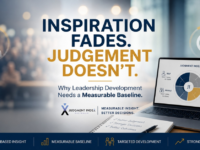
As organisations grow, decision-making often becomes slower and more complicated. Leaders add processes, involve more stakeholders, and create additional layers of approval in an effort to reduce risk and improve outcomes. Yet many organisations discover that despite these efforts, decisions still take too long, accountability becomes unclear, and teams struggle to move forward with confidence.…
We live in a remarkable age. At no other time in human history have we had such immediate access to information. Within seconds, we can search almost any topic, consult experts from around the world, ask Artificial Intelligence for recommendations, access decades of research, or gather countless opinions on virtually any issue imaginable. Yet despite…
In a world flooded with workplace assessments, one question matters more than any other: Can you trust the results? Organisations invest significant time and resources into hiring, developing leaders, managing risk, and building high-performing teams. Yet many of the tools used to support these decisions are accepted at face value, with little scrutiny of the…
Why Most Organisations Don’t Actually Understand Their Leaders (and What Changes When They Do) Most organisations believe they understand their people. They have performance reviews. They have engagement surveys. They have competency frameworks. They have succession plans. But when you ask a simple question; “Which of your leaders will succeed in a more complex role…
A recent Harvard Business Review article by Ruth Curran, Steve Patscot, and Edward Stadolnik examined an important question: How do leaders actually reach the C-suite in S&P 500 companies? Their conclusion challenges one of the most common assumptions about executive leadership. “For ambitious executives, reaching the C-suite increasingly requires more than functional expertise.” For many…
Resilience is often treated as a wellbeing concept. In reality, resilience is now a business capability. Australian organisations are operating in environments shaped by: ongoing uncertainty workforce fatigue rapid change emotional complexity increasing mental load Leaders are expected to remain calm, make quality decisions, support teams, and maintain performance under sustained pressure. The challenge is…
Modern leadership is no longer just about strategy and execution. Today’s leaders are expected to manage: constant change competing priorities emotional pressure workforce uncertainty rapid decision-making increasing visibility Many Australian leaders are functioning under continuous cognitive overload without realising how significantly it affects judgement. Pressure does not simply create stress. It changes the way people…
Most people assume imposter syndrome only affects junior employees or people early in their careers. The reality is very different. Research published in the Journal of General Internal Medicine found that imposter syndrome affects professionals at every level, with prevalence rates reaching as high as 82% in some studies. The issue is especially common among…
According to Gallup workplace reporting and APAC workforce analysis, Australia is experiencing one of the region’s most concerning workforce trends: Rising active disengagement. Burnout is accelerating. Leadership fatigue is growing. And increasingly, employees feel emotionally disconnected from the organisations they work for. Most companies still describe this as an engagement problem. But that diagnosis is…
According to Gallup workplace engagement reporting and APAC workforce analysis, Malaysia has steadily improved workforce engagement over the past decade through stronger leadership alignment, manager capability, and values-driven workplace culture. While many organisations across APAC continue struggling with burnout, disengagement, and workforce instability, Malaysia has quietly built something more sustainable: Steady engagement growth. Not explosive.…
According to Gallup’s State of the Global Workplace reporting and APAC engagement trend analysis. New Zealand consistently outperforms many APAC countries in one critically important workforce factor: Trust. Employees report stronger: trust in leadership team cohesion relational stability emotional connection workplace optimism Australia, meanwhile, is moving in the opposite direction. Across many industries, organisations are…
Based on Gallup’s workplace engagement reporting and APAC workforce trend analysis, China has become one of the world’s most productive economic powers. Its workforce is recognised globally for: operational intensity execution speed manufacturing capability tactical precision large-scale delivery capacity Yet despite extraordinary productivity, employee engagement across China remains among the lowest in APAC. This creates…
According to Gallup’s APAC workplace reporting, Thailand has achieved something many developed economies are struggling to replicate: A dramatic rise in employee engagement. Over the past decade, Thailand’s engagement reportedly doubled from 14% to 34%, making it one of APAC’s strongest workplace improvement stories. Australia, meanwhile, remains largely stagnant. Burnout is rising. Active disengagement continues…
The Philippines continues to stand out across APAC for one powerful reason: Optimism. While many countries battle burnout, disengagement, and emotional exhaustion, Filipino workplaces consistently demonstrate high levels of: energy morale relational connection workplace optimism emotional resilience Australia is heading in the opposite direction. Active disengagement is rising. Optimism is declining. Emotional fatigue is becoming…
Japan presents one of the most fascinating workforce paradoxes in the world. It consistently delivers: operational excellence extraordinary discipline high consistency global productivity leadership strong organisational reliability Yet despite these strengths, Japan continues to report some of the lowest employee engagement levels in APAC. Australia sits at the opposite end of the spectrum. Australian workplaces…
Over the past decade, Indonesia has quietly achieved one of the most significant employee engagement improvements in Southeast Asia. While many developed economies struggle with burnout, disengagement, and workplace fatigue, Indonesia has steadily strengthened workforce optimism, alignment, and organisational commitment. Australia, meanwhile, remains stuck. Engagement levels have stagnated. Active disengagement is rising. Burnout continues accelerating…
Singapore consistently outperforms most of APAC in workplace engagement, organisational clarity, and leadership consistency. Australia continues moving in the opposite direction. Despite strong talent, high education levels, and advanced industries, Australian workplaces are experiencing: rising active disengagement growing burnout declining optimism leadership fatigue increasing emotional exhaustion Why? The answer is not cultural. It is structural.…
According to Gallup’s State of the Global Workplace reporting and APAC engagement trend analysis, India is experiencing one of the sharpest rises in quiet quitting across the region (Gallup: India Quiet Quitting vs Engagement Trend 2014–2025). At first glance, this seems contradictory. India’s younger workforce remains highly ambitious. Career drive is rising. Entrepreneurship is booming.…
Across the Asia-Pacific region, employee engagement is moving in dramatically different directions. Some countries are experiencing rising optimism, stronger morale, and deeper workplace commitment. Others are facing silent disengagement, burnout, and collapsing trust. Australia sits at a dangerous crossroads. But here’s the bigger issue most organisations are missing: This isn’t just an engagement problem. It’s…
Every business feels the cost of poor judgement. Not in theory. In real dollars, lost productivity, damaged culture, and preventable staff turnover. HR leaders see it in mis-hires that looked perfect on paper but fail in practice. CEOs feel it when leadership decisions slowly erode performance and trust across teams. Recruiters experience it when a candidate interviews…
A recent feature published by The New York Times and The Athletic has brought international attention to an important conversation many organisations are only beginning to explore: How do you truly identify high-performance people before pressure reveals everything? The article highlights the work of Judgment Index™ Consultant Ken Smithmier and examines how elite sporting organisations,…
Most CEOs have access to vast amounts of data. Financial performance. Operational metrics. Compliance reports. But one critical area remains invisible. Human risk. The Missing Layer of Insight Every outcome depends on people. And people operate under: pressure uncertainty competing priorities The real question is: How does this affect their judgement? Why This Matters Now Organisations are facing: increasing complexity faster…
Modern organisations no longer operate within clear boundaries. They rely on complex ecosystems of: contractors subcontractors external partners This creates scale and flexibility. But it also raises a critical question: How do you ensure consistent decision-making across people you don’t directly employ? The Illusion of Control Most organisations assume that policies, inductions, and compliance systems are enough. In reality, these tools only address visible behaviour.…
For decades, organisations have measured risk through compliance. Policies. Procedures. Incident rates. But across leading global frameworks including ISO 45003, Safety II, and High-Reliability Organisation principles, a different reality is emerging: The true driver of performance is not compliance. It is human judgment under pressure. The Shift from Compliance to Capability Traditional risk models focus on what…
For many CEOs and HR leaders, recruitment has never been more data-rich. Yet hiring has never felt more uncertain. You have the tools: Psychometric testing AI-screened CVs Structured interviews Reference checks Dashboards tracking time-to-hire and cost-per-hire And still, the same patterns keep appearing. Senior hires who look exceptional on paper but make poor judgment calls under…
There’s a pattern that often emerges among people in leadership roles. The strongest leaders are often the most exhausted. They are the people everyone relies on. The ones who say “yes” when their schedules are already full. The ones who carry the emotional weight of their teams. The ones who stay steady and composed for…
Clive Elliott recently shared a great reflection on what we often miss when assessing people at work and it struck a chord. The issue is rarely capability. More often, it’s judgement. We live in a world that loves metrics. Revenue targets, efficiency scores, engagement percentages. Yet when it comes to something so central to organisational…
Most high performers don’t struggle because they lack insight. They know their strengths. They’ve completed assessments. They’ve read the books, attended the workshops, and reflected on the feedback. And yet—under pressure—they still make the same decisions, have the same conversations, and feel the same friction points resurface. This isn’t a motivation problem. It’s an implementation…
Hiring Is Changing Faster Than We Think If you feel like hiring has become more unpredictable lately, you’re not imagining it. Between AI-assisted interview answers, shifting work expectations, and candidates who present extremely well but perform inconsistently, the landscape is changing faster than most managers can keep up with. As we move into 2026, one…
A Manager’s Honest Look at Modern Hiring and the One Tool That Finally Brought Clarity Have you ever hired someone who seemed perfect during the interview… Only to realise weeks later that they weren’t who you thought they were? If you’ve ever hired someone, this story will feel familiar. You used the same process. You…
Safety is everyone’s responsibility. But identifying the behavioural and psychosocial risks that lead to incidents and then doing something practical about them is often the hard part. . That’s where the Judgment Index (JI) assessment and its suite of reports add real value. One assessment, many reports A single JI assessment generates a library of…
In today’s workplace, HR professionals are at the forefront of managing rapidly evolving demands. From navigating shifting organisational priorities, to championing employee wellbeing, the pressure on HR teams seems to have never been greater. But amid these challenges, an important question emerges: How do HR professionals ensure that they, too, are supported and looked after? …
In many organisations today, a recurring frustration emerges, managers not fully taking ownership of ‘HR’ issues, avoiding responsibility for leading change, or making decisions without a grounded reliance on facts and evidence. This challenge hampers effective leadership, disrupts team cohesion, and slows organisational progress. Understanding the Root Causes Many managers perceive HR and change management…
In an era where business landscapes transform at lightning speed, adapting to change isn’t merely unavoidable, it’s critical for survival. Organisations face continual disruptions from evolving markets, emerging technologies, and shifting workforce dynamics. Successfully steering through this flux requires more than a well-crafted plan; it demands a deep grasp of the individuals driving the organisation…
The Link Between Self-Awareness and Team Success: How Judgment Index Reports Foster Professional and Personal Growth Amidst the constant changes and challenges of today’s workplace, nurturing self-awareness is now a critical factor for achieving organisational effectiveness. Self-awareness not only enhances individual effectiveness but also significantly contributes to overall team success. One powerful tool that organisations…
As HR professionals, we all know the frustration of combing through countless resumes, hoping to find the ‘perfect’ candidate for our open positions. We’ve spent late nights trying to decipher which candidates will thrive in our unique company culture and who will deliver results under pressure. In a world where traditional hiring methods often fall…
Selecting the right candidates is one of the most critical tasks facing any organisation. With ever-evolving job markets, talent shortages and a priority on diversity and inclusion – traditional hiring methods often fall short. The Judgment Index differs when included in hiring practices because it measures the candidates’ values-based decision-making styles. Unlike conventional personality tests,…
The festive season brings joy, celebration, and warmth, but it can also introduce stress from various sources — whether it’s family expectations, work commitments, or financial pressures. Just like the insights derived from the Judgment Index assessment can help us understand our behaviours and stress responses, applying simple strategies can enhance our ability to navigate…
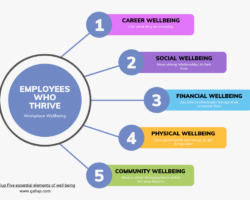
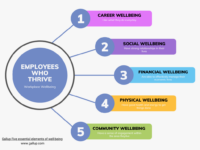
Imagine finding a workplace where wellbeing is priority. Where the person you started there as has had endless opportunities to develop their strengths and identify and work on development areas both inside and outside of work - all the while being supported and...
We all hate losing good employees but what if the reason was ourselves as a manager – or leader. It doesn’t matter whether you are the direct manager or a few more rungs up the corporate ladder, according to a survey in 2019 by Career Addict 79% of people left because of...
How are you avoiding the Great Resignation? We have all heard about the Great Resignation by now – the mass exodus of unhappy employees leaving companies in their droves. Staffing is harder than ever, and attracting and retaining top-quality employees can be brutal in this market. Research by Revelio Labs investigated turnover rates for a…
If you think back to the best team that you have been a part of, chances are that that it was fun, productive and exciting but most of all there wasn’t a lot of complaining happening. That team was most likely resilient. Resilience, in its most basic form, is the ability to bounce back from…
My friend rides a motorbike. He has always ridden a motorbike. He loves it and he doesn’t think twice about the risks. A couple of weeks ago he took me for a ride on the bike, and...
It was seriously frightening to read in ‘The West’ the other day that over a two year period 38 weapons had been discovered at Australian airports after supposedly high-quality screening...
Modern day life and lifestyles both at work and in our personal lives expose us to more and more stressors all the time. So much to do, so much to fit in but only limited time.